
99 Problems: Joyride by Susan Orlean, with science author Starre Vartan
I have always been ready to be lucky...


Welcome Story Doula readers, and especially new paid subscribers this month. Your support helps me keep sharing stories here and elsewhere. My huge, sincere thanks.
99 Problems But a Book Ain’t One invites people to choose a book that has helped them get through a problem.
Starre Vartan is an American-Australian journalist who publishes widely in newspapers and magazines. Her book, The Stronger Sex: What Science Tells Us About the Power of the Female Body, was released in 2025. She lives between the United States and Australia, where she often stays with her father.
I met Starre at her book launch at an offshoot of the Sydney Writers’ Festival on the South Coast of NSW. As smaller festivals go, we ended up having dinner together afterwards, and talked about the precarity of writing – and the precarity of everything else.
Here, we pick up where we left off that night. For this instalment of 99 Problems But a Book Ain’t One, Starre has chosen Joyride: A Memoir, the memoir/writing guide by New Yorker writer Susan Orlean, also released in 2025.
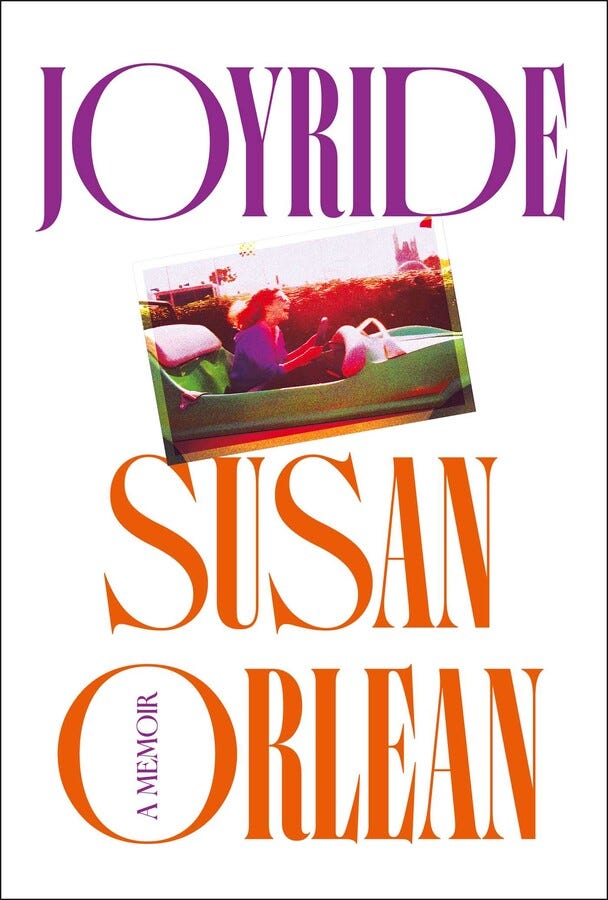
Bel: I was very curious that you chose Joyride, because it came out very recently, in 2025, and I asked you to pick a book that had changed you. So, I just wanted to start up by asking: where you were and what you were doing when you discovered Joyride.
Starre: I was here in Australia. I was kind of finishing up the promotions for my book, The Stronger Sex. I’ve enjoyed some of Susan Orlean’s writing, but there’s also stuff of hers I don’t like at all. She’s not my top favourite, most amazing journalist influence or anything, but the writing of hers that I’ve liked, I’ve really liked. I don’t think I even read Joyride until 2026— or listened to it, because I listen to most of my memoirs. At the time, I’d been just finishing this beautiful summer here. Everything seemed great with my work, but I was having some conflicts with my dad. We kept trying to work on projects together and ending in yelling matches. And this is relevant to your question because I just kept hitting a wall with him, and he’s elderly, and I’ve been trying to help him. I came to the sort of realisation: he doesn’t need or want my help. Which was disappointing, but a necessary reset.
Bel: And you didn’t grow up with your dad?
Starre: Correct. I was raised by my grandma (my dad’s mom), so I have been getting know him now, in middle age. So I didn’t go through that teenage period and maybe 20-something time where you like understand your parent as a human being. But that conflict and then understanding him better also helped me revisit some ideas I had learned from him that were no longer serving me, including about my career—and Orleans’ book is all about her own writing career.
This was happening at the same time when I started feeling so frustrated about mistakes that I’d made during the post-publication period of The Stronger Sex. I felt like I’d really messed it up and gotten it wrong.
That feeling of flailing echoed another time in my life. In my 20s, I had no help. My grandmother had passed away, and I was this young person who literally had to figure it all out for themselves.
I was 24 years old when I went through the toughest year of my life. And I’m so angry at the adults in my life then—my father, but also other adults, because nobody was there for me. My friends supported me as much as they could but they didn’t know anything either… what a bunch of assholes [the other adults were]. I’d lost my grandmother— my primary parent. I was having panic attacks. I was doing my first job in New York City right after 9/11. My first relationship, all of these things, and … just nobody was there.
Reading Joyride helped me look back and really appreciate that younger person, because young-writer Orlean had quite a lot of support from her parents (she had the choice to reject it at times which I didn’t). Her early career really made me think about my own path anew.
As I read her memoir, I tried to think about how I might write about my early career. That’s almost another person in a way, because it was 25 years ago—a long time. But like Orlean seems to feel about her younger self, I’m feeling really proud of her, the work she did.
And then I had this little sort of echo of that feeling from 25 years ago with my book, where I was feeling that there were many things that I should have known, and I needed to know, and I wasn’t getting much guidance. Most of it has come from a group of writers who also have written science books, or are writing science books. They’ve been this incredible, amazing resource, and, you know, hopefully I’ve been a resource for them.
All of this was sort of coming together at the same time. I think we talked about this when I first met you— my income was just a mess. And I really internalised, and I went through— and this has happened to me repeatedly over the years— I internalised feeling like a loser. Because I wasn’t succeeding in the capitalist paradigm. And intellectually, I understand that this is a particularly difficult time, and never have we been so unrewarded for hard work, and the meritocracy idea that I grew up with, that even though it was never perfect, was, like, a total sham.
I’m young Gen X, sort of in between X and millennial, but, like, I think millennials have really felt this as well. Just felt, like, I feel like we’ve been lied to. And it’s really frustrating.
Bel: We’ve been gaslit!
Starre: It’s so frustrating. But through this process I realized I’ve been tying my worth to money. And that ties in with my dad, because I realised that he taught me that— because he ran a business, he ran an advertising agency here in Australia. He was the creative director. It was his own company. And growing up, he was my example of career success.
Bel: And he had monetised, inverted commas, ‘his art’.
Starre: Yes. And I think living here and being with him and going through the various other emotional sides of our relationship also helped me see that part of it. Because then I was also like, I have $3,000 left in my bank account. Like, what the fuck? I’m too old for this. And then, not just the practical issue of that, but then feeling so guilty and, like, just unaccomplished and pathetic and awful about myself.
And then I was like, ‘Oh, here’s the person who taught that to me. He’s right there’. And he’s not particularly ashamed of me. He doesn’t think I’m terrible or whatever. I mean, I think he maybe gets a little frustrated ... but he sees me working hard. He doesn’t really understand either. But just talking to him and understanding where he’s coming from and understanding that was my model, which is a completely irrelevant model at this point.
When I read the great writer E.B. White’s book Here Is New York for the first time, I was struck by the line “No one should come to New York to live unless he is willing to be lucky”… I felt he was saying it’s up to you to prepare a soft bed for luck to land in, regardless of where you are. Reading that line changed me. I realised I have made that soft bed. I have always been ready to be lucky.
Joyride, Susan Orlean
Starre: I have so many similarities with the beginning of [Susan Orlean’s] career. She is very scrappy. She’s like— get it! Going out there and finding these fun story ideas. I did the same. I worked at an alternative weekly in Connecticut. So I was writing about different topics than Susan Orlean, but I was writing about the things that I still care about today. I had this very similar early career of being so passionate and excited about the things I was into. And also had some nice little opportunities come up. I did some internships, um, and I was working in New York City. And then it very much diverged. Orlean gets a couple legs up or opportunities to write for really big publications from that early career.
Bel: She was ready to be lucky, she said.
Starre: Yes, and so was I. But my career was probably, I think, about 20 years after hers. I think that was the difference between us. I started a blog. It was called Eco Chick. And it was all about sustainability and green living for women, because at that time, there were only peak oil and these very sort of wonky political environmental blogs. And I was like, ‘I want something that’s more accessible that feels very friendly to women’. A lot of the online spaces were not friendly.
Bel: And you saying that, you describing that blog now— that’s a perfect Substack, right? But it was ahead of its time, I guess.
Starre: So that ran for like 10 years, and it had a great run, and I published a book based on the blog, and I was like moving forward in the way that I knew it, and I was pitching and pitching and pitching stories, and my big break never came like it did for Orlean.
So reading [Joyride] felt both very familiar in certain ways—her energy and the way she approached her career and her open-mindedness and her curiosity. And then... I feel like I went in this other direction. She started writing major features for magazines on really esoteric and random subjects, which was something there used to be more room for in publishing. She got to practice a lot. My blog led me to being a very early influencer. I got sent things and I would wear them you know? And it was really fun. I had a great time. I went to Fashion Week for four or five years, like every season. I went to London Fashion Week at one point. Feature publishing felt like such a closed world, and I think that in certain ways, the fact that I was doing a blog that was successful in this area, like, people kind of discounted me as a serious writer. I would be interviewed for the New York Times as an expert in this area, but I wasn’t the person writing the article.
Bel: You became the source.
Starre: Yeah. My idea was that you bring people into environmental thoughts and ideas through the areas that are accessible to them. So maybe it’s clothing and then you’re like, ‘hey, did you know all of this stuff that happens with clothes?’ Or maybe it’s beauty. ‘Do you understand what’s in your beauty products and how that affects your health and then the health of the water supply and animal testing’, or ‘Are you into cooking, food, blah, blah, blah’. Right? So I was like, can we bring more people into thinking about these things? I grew up very connected to the environment, but many people have not. So that was my idea. And I think it was a total fucking failure, because look where we are now—there hasn’t been forward movement on most of those areas—which is why I changed tack and wrote a book about women’s bodies.
Bel: And once again, ahead of your time, because this idea of bringing voices together, being an influencer before that monetisation pathway existed. And then what you’ve just talked about is writing’s dirty little secret, which is, here you are, with your book. You’ve got your picture inside it. And I think a lot of people would be really surprised to hear that it is still really tough, even having this. So thank you for being so frank.
Starre: Yes, you’re welcome.
Bel: You know, I’m grateful that you suggested Joyride because I got to read your books side by side, in preparation for this chat. And what really struck me as I was reading both of them, I was thinking, my gosh, these are both love letters. You know, Susan’s is a love letter to writing. And yours is a love letter to the female body, but wrapped in this husk of anthropology and science and sports physiology. And I know you read Joyride after you wrote your book. But what was the experience of writing the book like? Was it a joyride?
Starre: I don’t think I’ve ever enjoyed doing something in my career as much as I’ve enjoyed writing a book. I’ve loved books since I was very, very young and like many readers and writers, they’re part of my identity. And to be able to actually do that, it just feels joyful to have the product at the end. I was so happy that the actual writing process was really, really fun too. I didn’t have any major agita around what I wanted to say or how I wanted to say it. It was great (laughs).
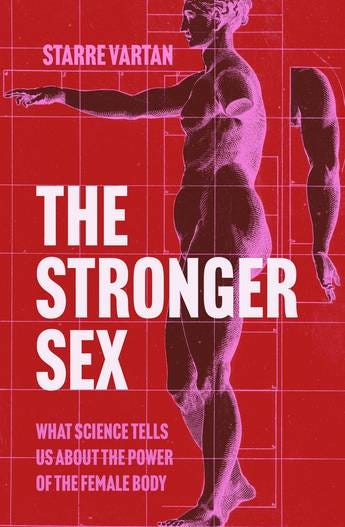
Bel: Reading your book, I have to tell you that I feel like it has fundamentally changed how I’ll talk to my children about strength. I mean, I’m always trying to talk about anything in the world to them from a somewhat feminist lens, but I feel now that I have the language to explain things about the female body that I intrinsically knew, but the science is there behind it. So thank you.
Starre: You’re welcome (laughs). That’s actually, I would say, the number one thing I’ve heard, which is interesting: ‘These are things that I feel like I knew, either in my body, intrinsically’, like people said it slightly differently, and I’m like, that’s so fascinating that so many people felt this. It was like there, but they didn’t have it, because our world hasn’t designed a place for it.
Bel: That’s right. Not in education, not in sexual education, physical health education, at all. You know, you write really beautifully in your own book about having that intrinsic knowledge as well. This sense of your own strength and your own relationship to your body. How has your relationship with your body changed since writing, if at all?
Starre: I think I feel more comfortable being a strong person in the world and exploring that. So, when I’m dancing, and doing expressive dance and ecstatic dance, after a while, you become the dancer and not the person dancing, right? But it has allowed me to remove some of —because they’re always going to be there — some of the gendered ideas about what a female dancer does and what kind of moves she does. I feel like my dancing is very gender-neutral now because I use my physical strength in my dance.
It also changed how I feel about ageing. Growing up with my grandma in her 60s and 70s, she was strong. From the get-go, I had a different perspective on what being an older woman could be. But writing the book and really getting into the science and learning it— I don’t have that fear of ageing in terms of the things that really are important to me. I want to keep traveling and exploring and doing challenging physical things, and I feel I still got it! And to an extent, you know, the amount of work you do with your body helps you age well. The researchers are finding more and more evidence of that, through healthy ageing. And it breaks my heart that women lose out on because they aren’t encouraged to do the harder physical labour. Women live longer, but they have poorer health at the end of their lives than men. And a huge percentage of that is down to the fact that they start off as children being expected to do less physically and continue that throughout their whole lives.
Bel: And it sounds like, from what you wrote in the book, that’s kind of historically atypical as well— what we’re doing now is not what women did.
Starre: Yes, it’s a very modern phenomenon for women’s bodies to be so disused. And then to become so weak in old age. It’s completely unnecessary. You look at these elderly women now, and nobody told them. And now they’re dealing with all this disability. In many cases, there’s no reason for that at all.
Bel: You write beautifully in your book about the longevity of women who live in Okinawa, Japan. And their embrace of this concept Ikigai:
Ikigai comes from the combination of iki, which means “to live,” and gai, which means “reason”. Finding your ikigai, or reason for living, is something most older Okinawans have spent time figuring out for themselves, and it serves as a guide for making life decisions… Ikigai is a combination of passion, vocation, profession and calling
The Stronger Sex, Starre Vartan
And again, the beauty of reading books in tandem, and feeling like your book is itself something an expression of your Ikigai and reading Joyride alongside it, where Susan Orlean has done something similar. Susan has imparted all this advice for a writer going forward, but also, as you say, you’re coming from this different time in this different context. What advice would you give to someone starting to write now who feels that, okay, this is my Ikigai, here it is. What would you tell them?
Starre: Something I didn’t do that I wish I had was being better at seeking out mentors and asking for help. Whatever your interest is, there’s probably a writing group for that. I wish I’d understood like, ‘oh, as a younger science writer, I should join a science writing organisation’, and then they will potentially connect me with a mentor or I might meet someone through that group as opposed to just feeling like, ‘well, who do I talk to?’ It felt too wide open. And now I’ve been a part of groups I’ve helped run. I was the vice president of Northwest Science Writers in the US. I understand how they work, but didn’t until my 40s. And that would have been so useful. And now I’m meeting these younger writers and I’m happy to help them and it’s great. And I’m like, ‘oh, well, that was a huge dumb oversight’.
Bel: Well, thank you. I know that writing in this economy, and in this era and in the capitalist project can feel like failure even when what you’ve done is success, but reading your book, as I said, it’s changed the way that I’ll speak to my children. And I love, even in this conversation today, same as Susan Orlean, you aren’t afraid to talk shop, which I think a lot of writers consider dirty— you know, ‘I’m not going to reveal the challenges behind the magic’. Like you’re not going to let people peep behind the curtain so it’s very generous of you.
Starre: Oh, good. Yeah. I feel like I’ve been doing that just in the last like year or two. It used to be so taboo to talk about your book advances with other writers and all that. And now we’ve all started just being like, ‘this is how much I got’. And these people that I look at, ‘oh my God, they’re amazing and they’re getting crappy advances for their next book too’. I don’t need to take things personally that aren’t personal. Out of all these revelations that I had around finances and self-worth and career, I did resolve that this is what I want to do. I don’t want to do anything else. This is the work that I want to spend my life doing.
Recently I had this moment of talking to these researchers and talking to some colleagues who were writing books, and they’re all going out and asking for funding. The researchers are doing it for their postdocs and for their lab and for this and that, the study they want to do, and sometimes they get the money and sometimes they don’t. I was like, ‘oh, right, this is just part of my job. I need to go out and get money for my projects, like all of these other amazing people in the world, nonprofit organisations and researchers.’
I’ve just been sort of like stuck in my dad’s capitalist mindset of like, ‘well, if I was good, I would be financially rewarded’. And that is not the business that I’m in and that’s not the type of work that I do. And this thing that has been like really dogging me for 15 years is resolved. My money situation isn’t materially so much better or anything, but I just have a completely different mindset about it, and I’m feeling okay. Joyride, and reflecting on my early career, and fights with my dad, and crying over my bank balance, and finally interrogating my feelings of worth all came together in this recent moment of my life and I get it now: This is my writing life. I’m here for it!
Starre has started her own Substack here, with big ideas from art, anthropology and anatomy.

Susan Orlean also has a Substack, publishing New Yorker-esque essays and more personal pieces here:

If you’ve enjoyed Story Doula, please consider a paid subscription!
Send me your reflections, suggestions and critical feedback to notes@belindalopez.net